



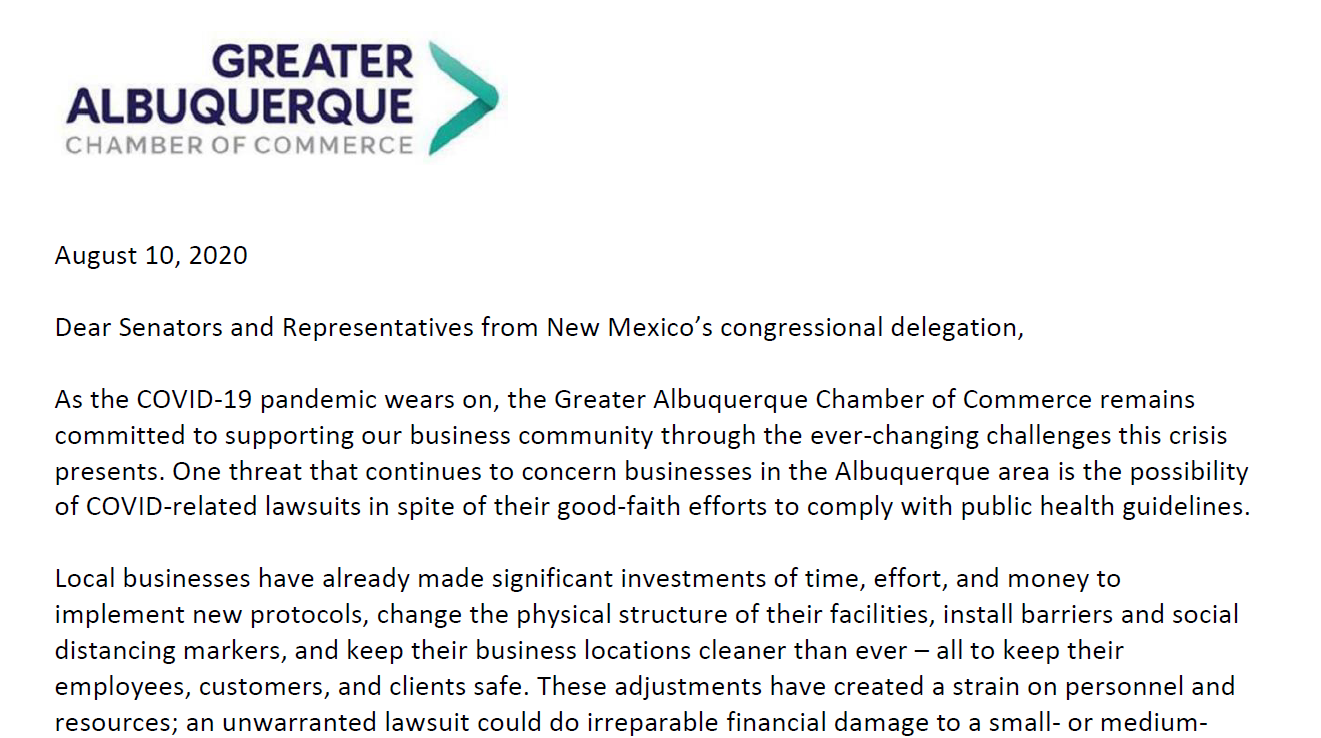
This week, the Chamber sent two letters to New Mexico’s congressional delegation, urging them to support liability protections for businesses, an additional round of PPP forgivable loans for certain especially hard-hit sectors (like our tourism/hospitality sector), and the extension of PPP eligibility to all non-profit organizations. Congress continues to discuss a potential “phase 4” Coronavirus relief bill that could include these – and many other – provisions.
These letters arrived in Washington on the heels of a lengthy, 18-page letter from the U.S. Chamber of Commerce – signed onto by our Chamber – that focused on five priorities for COVID-19 recovery legislation. The five priorities are:
- Liability protection against unwarranted lawsuits. While businesses, universities, and healthcare providers should be held accountable when they don’t follow public health guidelines, those who are responsible community members in protecting the health of their employees, customers, and clients should be protected from unwarranted or frivolous lawsuits. The GAAC supports the US Chamber’s call for temporary and targeted liability protections for businesses that do the right thing.
- Support for small and midsize employers. The CARES Act left gaps that must be closed. Non-profits not organized as 501(c)(3) organizations were excluded from the PPP; small businesses in low-income areas experienced challenges in accessing the program; caps on tax credits and timelines that are now apparently unrealistic—these gaps must be closed to help our local economies heal.
- Support for childcare and K-12 schools. Costs for K-12 and early childhood are higher as programs seek to protect their kids’ and workers’ health through barriers, social distancing markers, and personal protective equipment and meet their needs through distance learning. Schools need funding and support to keep our kids learning through this unprecedented crisis. Likewise, childcare providers will need additional support, especially as parents start to return to work.
- Unemployment and job training. The $600 in weekly unemployment benefits may be causing more harm than good at this point: it causes distortion in the labor market and, with two-thirds of beneficiaries earning more on unemployment than they did while working, it could discourage a return to work. The US Chamber advocates unemployment benefits that replace 80-90% of an individual’s earnings, up to $400 per week. Additionally, given that many jobs will unfortunately not return soon, the Chamber also calls for Congress to invest in programs that could help identify sectors with openings and help reskill job-seekers.
- State and local assistance. State and local communities need timely, targeted, and temporary support to help them through this crisis. The US Chamber is calling for Congress to reimburse state and local governments for costs directly related to their COVID response and to replace a portion of revenue lost, based on revenue projections compared to actual receipts.
We’ll continue following all the action in Congress and report back on the latest developments.