


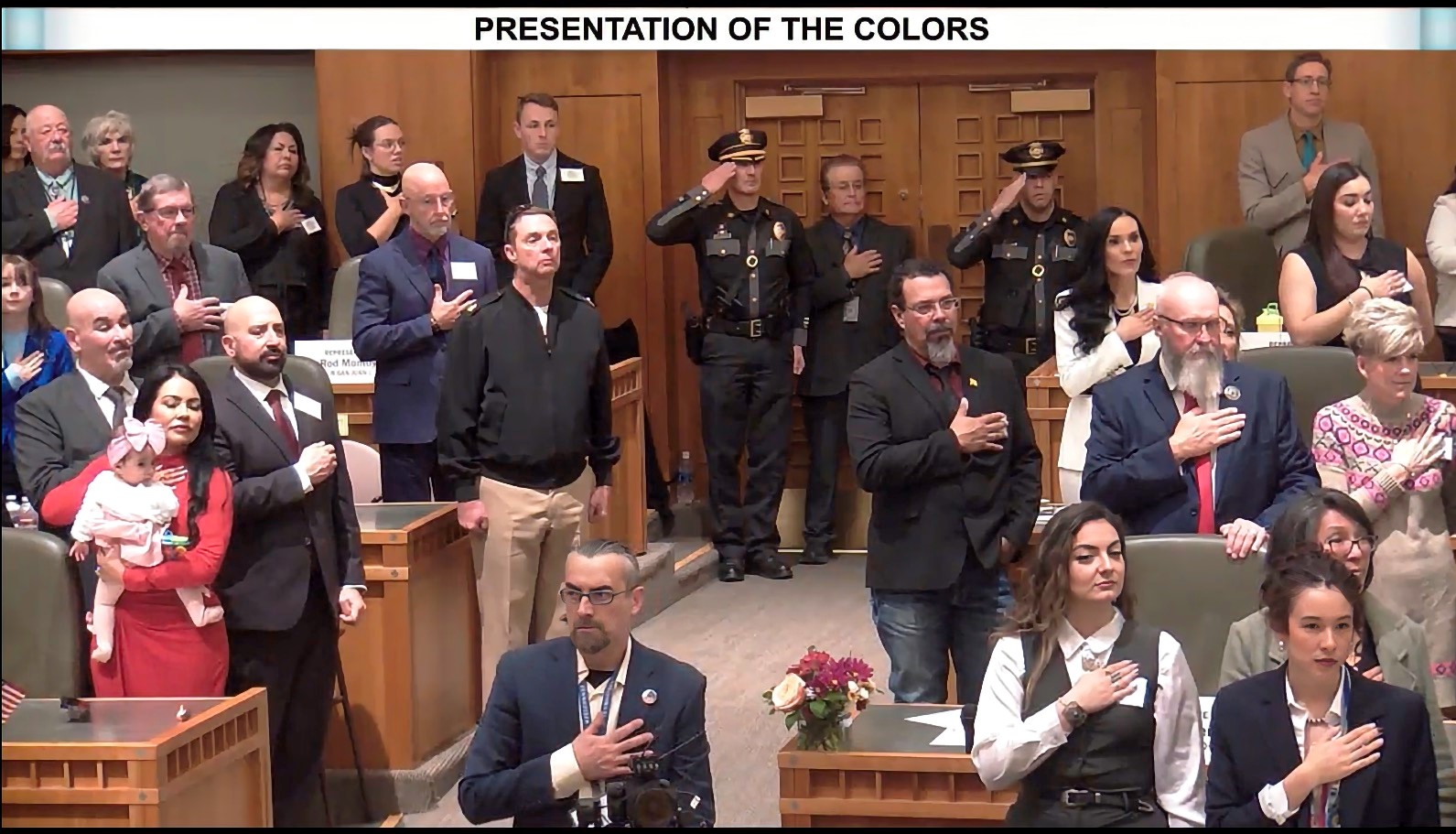

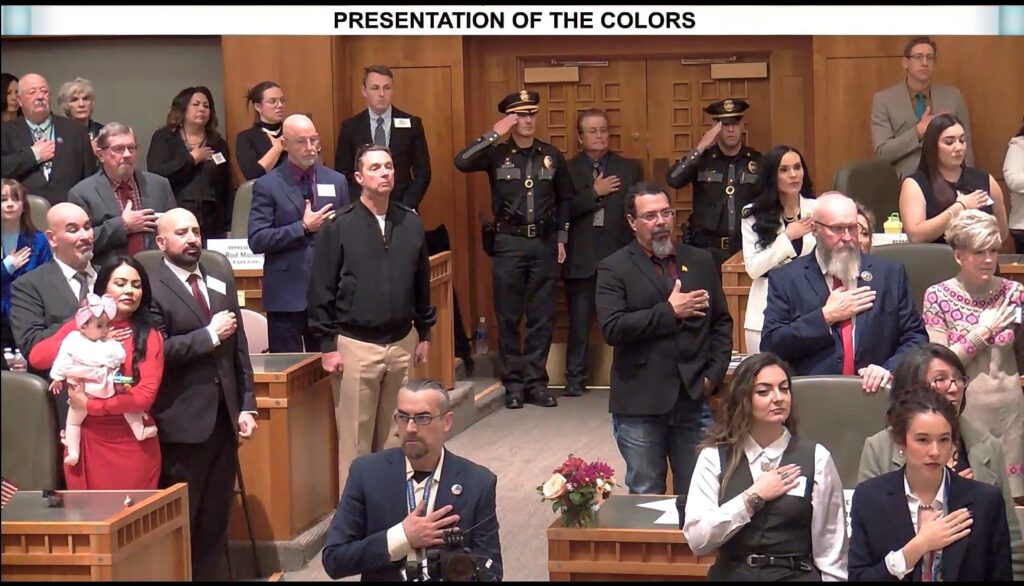
Both the House and the Senate met separately to go through the formalities of seating members and other administrative tasks. In the House, Speaker of the House Rep. Javier Martínez (D-Bernalillo) gave some opening day comments pointing out that beyond the budget there is a lot of work to be done including housing, health care and infrastructure. He also emphasized the need to get the details right (perhaps a signal that he won’t move legislation that hasn’t been properly vetted). He urged lawmakers to work for the people and to place partisan political point scoring, headlines and ego boosting to the side. He also encouraged folks to exhibit civility and respect for one another and, as he has in past sessions, to “disagree without being disagreeable.” As the House waited for the Senate to come over for the joint session, New Mexico’s poet laureate, Manuel González, read his poem titled, “The Land Remembers.” He wove a wonderful tapestry of New Mexico’s culture and the things we value and hold special.
The two chambers then came together in a joint session to hear the last state of the state message of Gov. Michelle Lujan Grisham’s administration.
STATE OF THE STATE ADDRESS
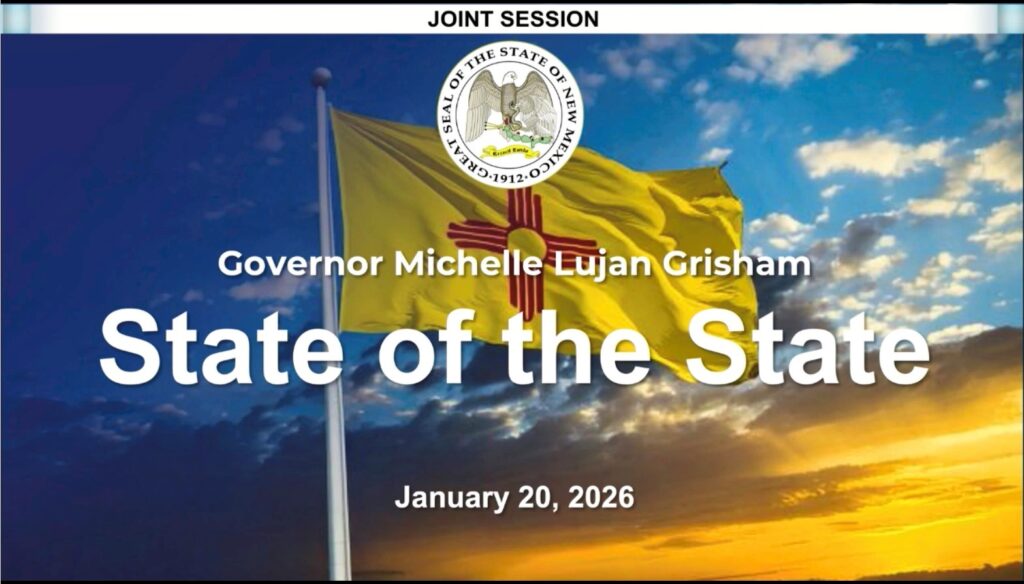
The following are the highlights from her speech. If you would like to read the entire presentation, click here. Prior to her actually appearing in the House chamber, a video was presented showing Lujan Grisham with three former Republican governors: Garrey Carruthers, Gary Johnson and Susana Martinez seated at a table in Tia Sophia’s, a noted Santa Fe restaurant wherein a number of political negotiations have gone down. Former Gov. Toney Anaya (Democrat) joined the conversation by phone. Lujan Grisham thanked the other governors for their service (she herself served in the King, Johnson and Richardson administrations) as she soon will join their ranks. They likewise thanked her for her service, and she also got a little free advice as well.
SPEECH HIGHLIGHTS
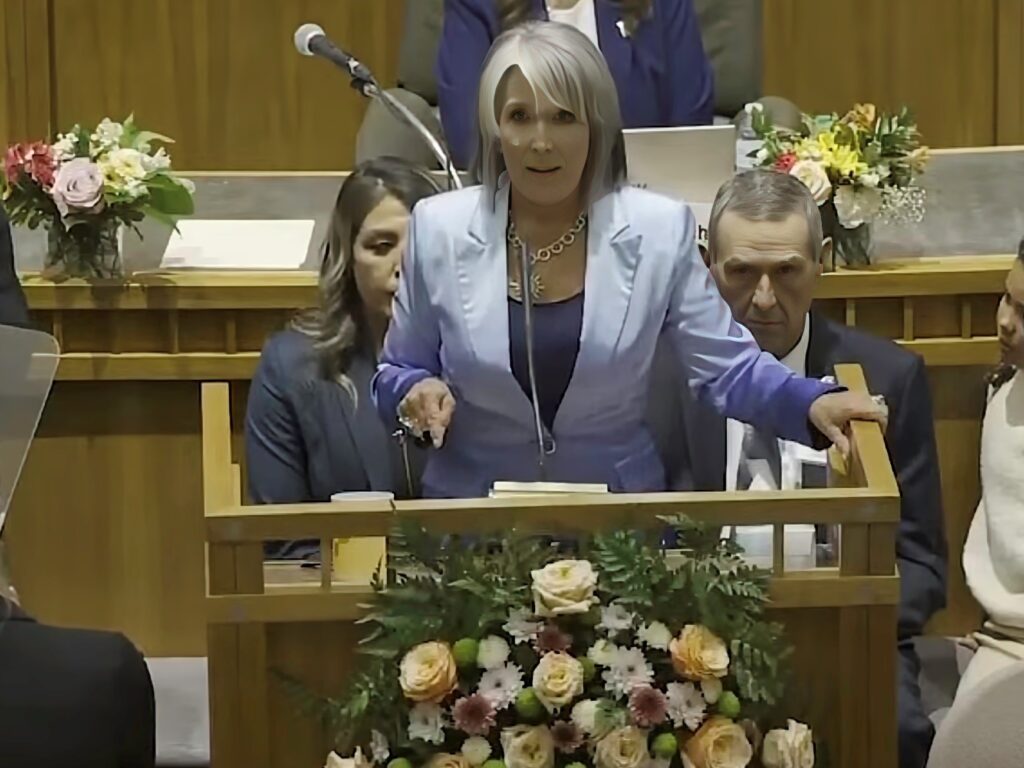
These highlights from the governor’s speech focus on the issues she wants the Legislature to address in this session. Her summary of past accomplishments can be found by looking at the text of the speech.
- Fast Tracking: The governor thanked Senate Majority Floor Leader Peter Wirth (D-Santa Fe) for agreeing to fast track three important pieces of legislation: $1.5 billion in road construction bonding; the medical (health care professions) interstate compact and modernization of the civil commitment laws. The latter is aimed at placing individuals who, through mental illness and/or addiction, in appropriate care facilities if they present a threat to themselves or others. Currently, individuals are sent to jail, usually to be released within a day or simply left to fend for themselves on the streets. The governor said, “It’s the result of a system that confuses compassion with neglect.” In legislative parlance, the three bills will be placed on the “rocket docket”, a term the governor claims she coined.
- Health Care: Lujan Grisham said about health care, “It’s not a luxury. It should be a fundamental right in America.” Having cited past actions, she went on to call for $600 million in funding for a new University of New Mexico medical school; approving all of the interstate compacts; elimination of the gross receipts tax on medical services to lower the cost of care and “meaningful malpractice reform.” She added, “We’ve done as much as possible to protect health care coverage; now we need to do more to expand health care access.”
- Public Safety: The governor pretty much laid it on the line, “… Any serious approach to public safety starts here: People who are committing dangerous, violent crimes must be held accountable-without hesitation and without exception. … I’ve spent seven years pushing for more engagement on public safety; more common-sense solutions; and, frankly, more backbone.” The governor called for amendments to the juvenile code to address growing teen violence; a ban on assault weapons; more severe punishment for felons in possession of firearms and pre-trial detention “to keep suspects charged with violent crimes behind bars while they await trial.”
- Economy: Citing lower unemployment rates, strong GDP growth, the state’s sound financial rating and attraction of new industries, Lujan Grisham advocated $150 million in tax credits for next generation technologies like quantum computing and fusion energy to “help cement New Mexico’s place as the home of America’s most innovative industries.”
- Infrastructure and Housing: The governor observed that new jobs need to be supported by infrastructure improvements and increases to the housing supply. She asked for $1.5 billion in road bonding, $110 million for housing, zoning reform and an interest rate buydown program to make mortgage payments more manageable. She emphasized that New Mexico is among the most affordable states which positions the state to attract workers from Colorado, California and Arizona.
- Child Care and Education: Touting the progress made in childcare and education, the governor asked for $160 million to fulfill the free to everyone childcare program. According to a UCLA study, 70% of kindergarteners are on track prepared to enter grade school. Literacy is increasing but the governor wants advanced reading instruction, known as the “science of reading,” mandated statewide as this method of teaching has proven successful in many states. Likewise, she wants new mandates for teaching math as well as banning of cellphone use during classroom hours. She gave a nod to her preference for a 180-day school year but said that should be debated more and be taken up in this session.
- Environment and Energy: Having issued an executive order to establish an aggressive “zero net emissions by 2050” goal, the governor now wants that etched in statute in order to make it more difficult for a subsequent governor to undo the “Climate Action Plan.” She chanted, “Put it in law, put it in law, put it in law.” She allowed, however, that this plan must also result in affordable energy for citizens and not result in skyrocketing utility rates. To that end, she wants to establish a “blue ribbon commission to develop a strategy to leverage and utilize private and public investments, grow our economy and protect consumers and businesses, “while meeting exploding energy demands with more clean power.” She advocates an “all of the above” approach to utilize all forms of clean energy.
- Taxes: While citing a number of past tax reductions, she did not advocate any further tax reductions and recommended only tax credits for emerging and innovative technologies.
She ended her speech with a partly serious and partly whimsical list of the 10 top New Mexico achievements including being No. 1 in Frito pie consumption, lowriders, sunsets that don’t need a filter, Zia tattoos and the shortest governor in America. She urged people to spend time with others, “to listen, disagree and keep trying.”
SENATORS HIT THE GROUND RUNNING
ON TUESDAY AFTER THE STATE OF THE STATE ADDRESS
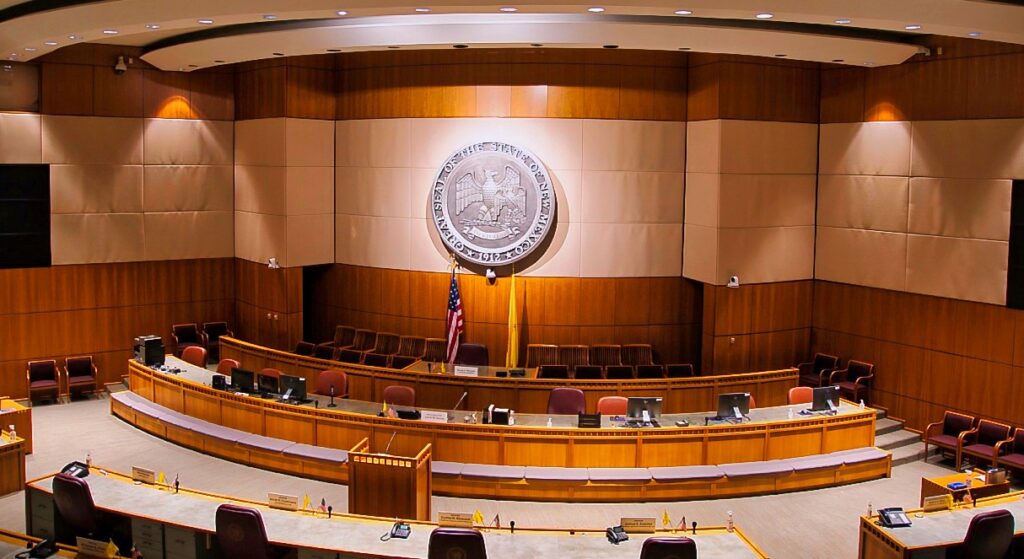
Senate Majority Floor Leader Peter Wirth (D-Santa Fe) quickly laid out the day’s agenda. “What we’re going to do here is we’re going to read messages from the governor for Senate Bill 1, 2 and 3. We will introduce 16 bills and we will recess,” Wirth said. “The Committee’s Committee will then meet, and we’ll come back down to the floor and read in that report. That’s our work for the rest of the afternoon.”
The majority of the 16 bills that deal with improving health care in New Mexico. Some of the bills introduced ranged from enacting the interstate medical licensure compacts to developing and expanding physician residency positions in medically underserved rural communities to constructing a new School of Medicine facility. Other bills included bonding authority to the State Transportation Commission with state highway projects, as well as a bill providing a definition for harm to self and harm to others in the mental health and developmental disabilities code and the assisted outpatient treatment act.
Sen. George Muñoz (D-Cibola, McKinley & San Juan), chair of the Senate Finance Committee, took the floor to talk about the Government Results and Opportunity (GRO) Program, which was established during the 2024 Legislative Session as a supplemental funding source to replace the Junior appropriations from previous years. The two-year reimbursement program is designed to support local projects, with all appropriations being managed by the Councils of Governments.
Sen. Joseph Cervantes (D-Doña Ana & Otero), who chairs the Senate Judiciary Committee, announced that the committee will meet at 1 p.m. Wednesday to hear Senate Bill 1 and Senate Bill 3 — dealing with the interstate medical licensure compact and providing a definition of for harm to self and harm to others to reform the process of civil commitment.
QUANTUM COMPUTING … HUH?
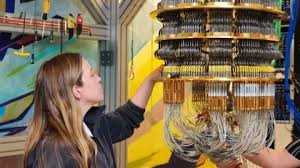
Many folks hear or read the term, but what the heck is it and why should we care? Quantum sounds like a James Bond movie or a sci-fi creation. In common language, quantum simply means an amount, you know, like quantity. Here’s the definition in physics speak: a discrete quantity of energy proportional in magnitude to the frequency of the radiation it represents. Boy, that sure cleared things up. Here’s why you should care: the federal and state governments are investing heavily to bring this new technology to commercial use because it is super-fast — up to 100 MILLION times faster than a conventional computer.
That’ll take your gaming experience to a whole new level. It also could result in constructing new medicines, solving complex logistical problems and boost manufacturing processes for openers. Quantum computers, however, are not designed for everyday computing, like games or spreadsheets. Conventional computers are better at that sort of thing. However, for solving certain kinds of problems (like advanced energy systems, manufacturing and national security), quantum computers are phenomenal. In an admittedly theoretical speed test of a complex problem, the quantum computer could produce an answer in three minutes — the best and biggest conventional computer is estimated to provide an answer in 10,000 years or so.
Quantum Basics
Even the basics make your head spin. But here we go. Quantum computing is a form of computation that uses principles of quantum mechanics to process information. Instead of using classical bits, which represent data as either 0 or 1, quantum computers use quantum bits, or qubits, which can exist in multiple states simultaneously (a property known as superposition).Therefore, quantum computers can evaluate many possibilities at the same time, which is particularly good for solving complex problems — examples would include molecular and materials simulation (maybe new medicines or building materials) or large-scale data analysis.

Bringing them to market
While quantum computing holds great potential, there are some bugs that need to be worked out. That’s why both the federal and state governments are dedicating significant funding for further research and development. What are some of those bugs? The qubits are highly sensitive to environmental interference which can cause errors. Therefore, sophisticated error correction tools need to be developed. Then, there’s a big engineering problem — how do you build systems with thousands and millions of reliable qubits? And, so far, only a handful of algorithms exist that produce better results than conventional computers. This isn’t rocket science — it’s a lot more complicated!
Federal Programs Supporting Quantum Development
The main federal effort is called the National Quantum Initiative (NQI) which Congress established in 2018. The NQI coordinates programs and initiatives through organizations such as the National Science Foundation, the Department of Energy, the Institute of Standards and Technology and the Department of Defense. The thrust of the NQI is to emphasize coordination of research, encourage public/private partnerships and train the next generation workforce.
New Mexico: A National Leader
Because of our strong research universities and the good fortune of having two national labs, New Mexico is positioned to assume national leadership in this field. The state already leads the Southwestern Tech Hub with Colorado and Wyoming. To that end, a $315 million investment in quantum computing has been proposed. The strategic objectives are:
- Establish New Mexico as a leading center for research, testing and commercialization.
- Attract and grow quantum computing companies and startups
- Utilize federal funding to develop commercially viable technologies and products.
- Build a cadre of skilled workers ready to land good paying jobs.
- Ensure that state economic development strategies align with national security and advanced computing goals.
A key element in the mix is the partnership with the U.S. Defense Advanced Research Projects Agency (DARPA). The state provides state resources and facilities to support testing and technology evaluations. DARPA contributes federal funding and program oversight. Together, the partnership will independently benchmark hardware and systems to assess real world performance.
New Mexico has also launched the Quantum Venture Studio to serve as a bridge between research and industry. The studio provides:
- Lab space, prototyping resources and technical support.
- Support to companies to take technologies from the labs and universities into commercially viable products.
- Connections to venture capital, mentors and federal contracting opportunities.
Private Sector
Quantinuum, majority owned by Honeywell, is a major player in the industry and has opened a research and development center in Albuquerque as a major hub for hardware development. They very much want to be involved in the community and, as an example, have joined the Chamber. We couldn’t be more pleased to welcome Zachary Vernon, director of Photonics, to our Board of Directors. Quantinuum is poised to move from venture capital funding to become a publicly traded company, having filed the paperwork necessary for an initial public offering. The company is valued between $10 and $20 billion. Salaries for skilled technicians range from $124,000-$145,000 for Advanced Integrated Photonics Designers and $65,000–$82,000 for Optics R&D Technicians.
As an example of workforce development, Central New Mexico Community College has received approximately $862,000 in federal funding to establish the quantum lab and support the initial workforce training efforts. A “Quantum Technician Bootcamp” provides an immersive and practical 10-week training program. In addition, CNM is building partnerships with the national labs and universities and leveraging federal and other investment resources.
A Gold Mine in the Making
Quantum computing holds the promise of attracting huge investments in our state that will provide enormous job opportunities not just for PhD scientists but also for skilled technicians. We’re talking hundreds if not potentially thousands of jobs. The state is well positioned and it’s taking advantage of our brainy resources to be in front of the pack rather than playing catch up. It’s a great opportunity.
LEGISLATIVE LEADERSHIP
Over the next few days, we’ll refresh your memories on who the legislative leaders are. Today, we’ll start with the Senate Majority leaders and tomorrow we’ll bring you the Senate Minority leaders followed by House leadership. Here we go!
SENATE PRESIDENT PRO TEMPORE
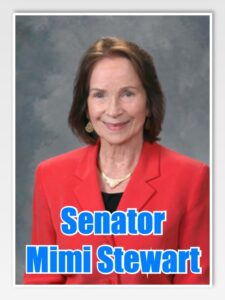 Democrat Mimi Stewart has been a senator since 2015 and represents District 17 (Bernalillo County). She has served as the Senate President Pro Tempore since January 2021. Before serving in the Senate, she served as a Representative in the House from 1995-2014. She is known for her focus on education, the environment, criminal justice and women’s issues. Stewart has a strong background in education, having worked as a special education teacher in Albuquerque Public Schools from 1978 to 2009. She has been widely recognized for her contributions to New Mexico’s education system and her commitment to making smart investments in education.
SENATE MAJORITY FLOOR LEADER
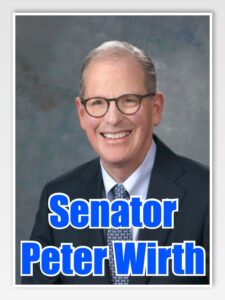
Democrat Peter Wirth is a longstanding legislator in New Mexico. He has been a senator representing District 25 (Santa Fe County) since 2009. Prior to that, he served in the House from 2004-08. A lawyer, Wirth graduated from Stanford University with a Bachelor of Arts degree in economics and Spanish and earned his Juris Doctor from the University of New Mexico School of Law. Wirth has been involved in various legislative roles, including serving as the Chair of the Senate Conservation Committee and Vice-Chairman of the Senate Judiciary Committee. He is known for his work on taxes, water, behavioral health among others and his even-handed stewardship of the Senate.
SENATE MAJORITY WHIP
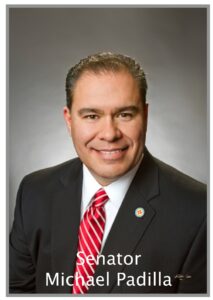
Democrat Michael Padilla has represented Senate District 14 (Bernalillo County) since 2013 and was elected Majority Whip in 2017. Padilla grew up in Los Padillas and is the youngest of five children. He graduated from the University of New Mexico and the University of Phoenix. He has served on various legislative committees, and his legislative priorities include early childhood education, economic growth, water management, and child safety. Notably, he introduced the “Hunger-Free Students’ Bill of Rights Act,” which aims to protect children from humiliation related to unpaid school lunch fees, a law signed by Gov. Susana Martinez. His legislation also resulted in the creation of the Early Childhood Education and Care Department.
AROUND THE ROUNDHOUSE
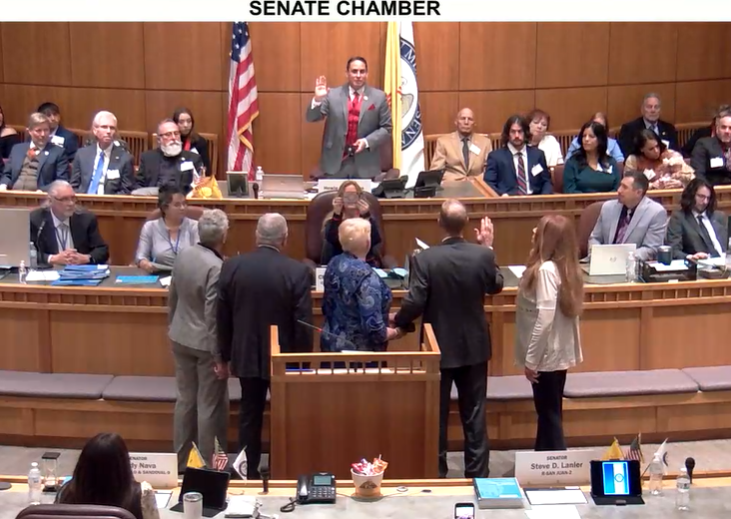
Lt. Gov. Howie Morales during the first day of the 57th Legislature on Tuesday.
Lt. Gov. Howie Morales convened the Senate on Tuesday with the appointment of Sen. Rex Wilson (R-Chavez, Lincoln & Otero) to his seat in District 33. Sen. Wilson was sworn in with his family alongside. He replaces former Republican Sen. Nicholas Paul, who resigned for personal reasons. Wilson is a former Lincoln County Commissioner — serving from 1997 to 2003 — and resides in Ancho.
SIGNING OFF FROM SANTA FE
Well, that’s a wrap on opening day. As we indicated, things are off to a fast start with committees actually meeting tomorrow to hear legislation. The Senate Judiciary Committee will take up a medical interstate compact and the House Health and Human Services Committee, according to their agenda, is poised to consider eight compacts. The Senate Judiciary Committee will also consider a bill dealing with “harm to self and others.” The Senate Finance Committee will work on the $1.5 billion road bonding bill. We also expect the “feed bill” (HB 1) which provides for the expenses of the Legislature in 2026 will be approved by the House and sent to the Senate. The House will convene at 11:30 a.m. and the Senate at 11 a.m.
Our very own Terri Cole, president and CEO of the Chamber and Sherman McCorkle, Chair of the Chamber’s Legislative Session and State Government Advocacy Committee will make presentations at the Public Safety Day at the New Mexico State Capitol being led by Sen. Nicole Tobiassen (R-Bernalillo). The event starts at 11:00 a.m. in Room 322 of the Roundhouse.
And we close with another interesting fact about the Land of Enchantment. White Sands National Park contains the oldest known human footprints in North America, dated to approximately 21,000 to 23,000 years ago. Wonder who was governor then? Thanks for joining us today. We’ll look forward to bringing you more news and views tomorrow. Have a wonderful evening.